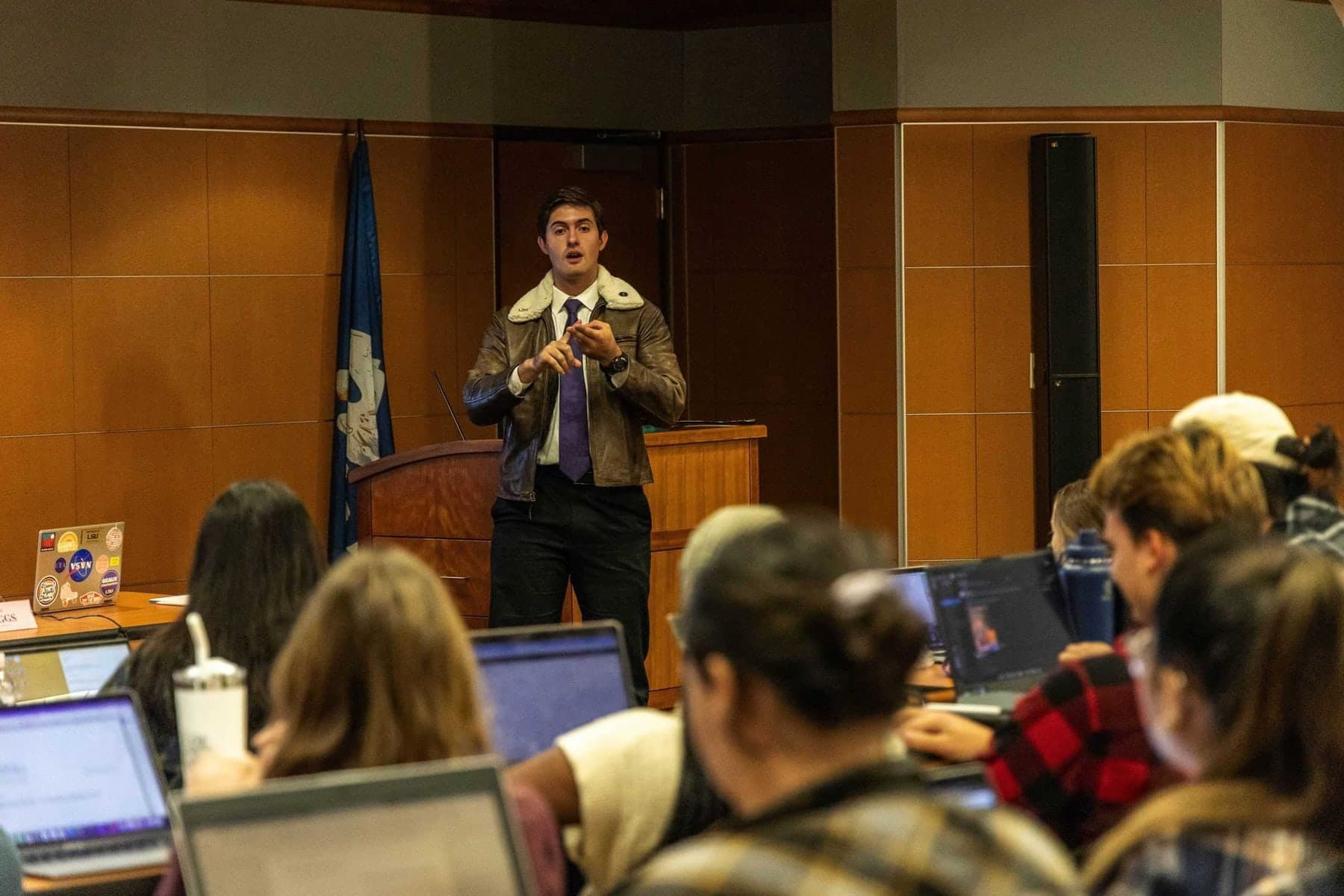
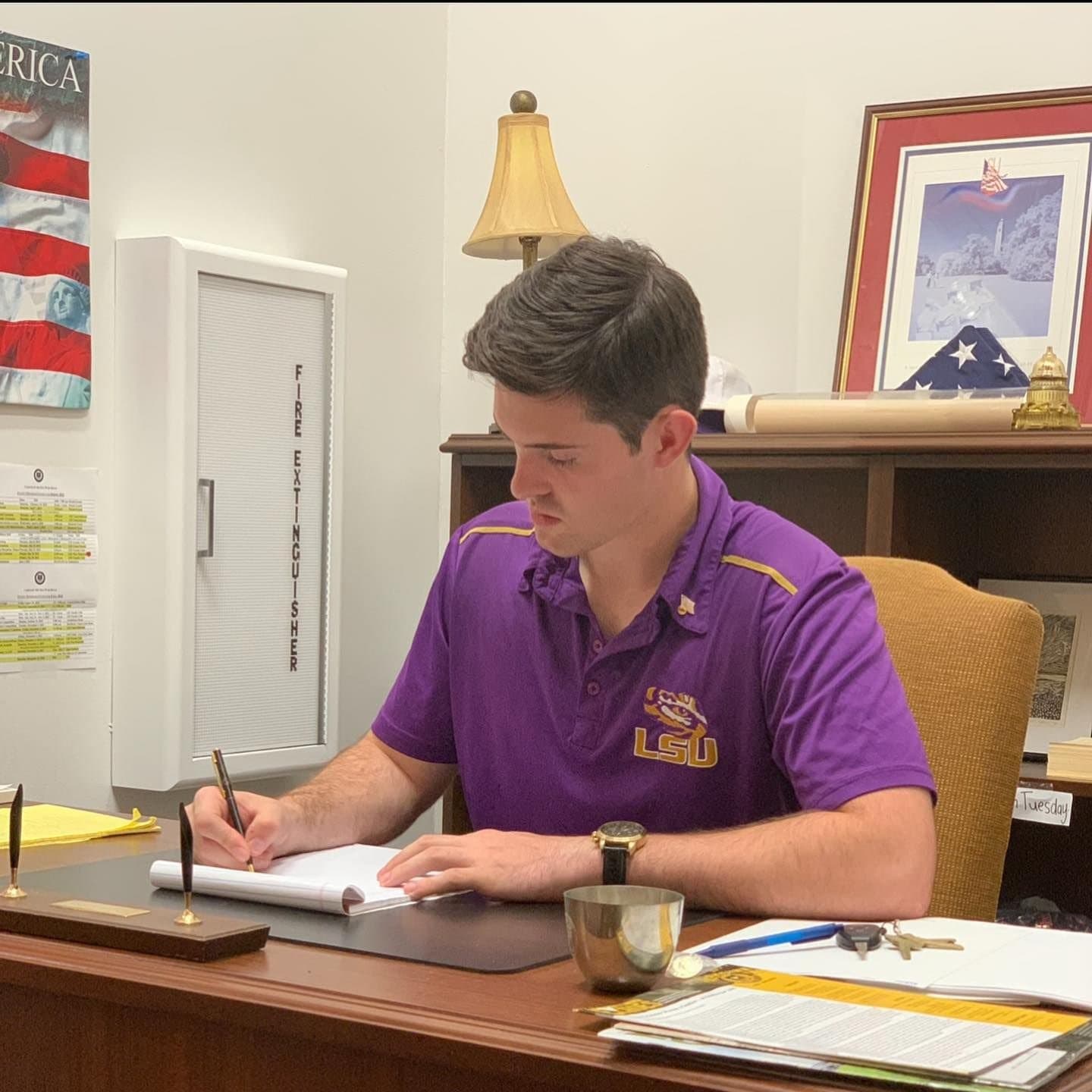
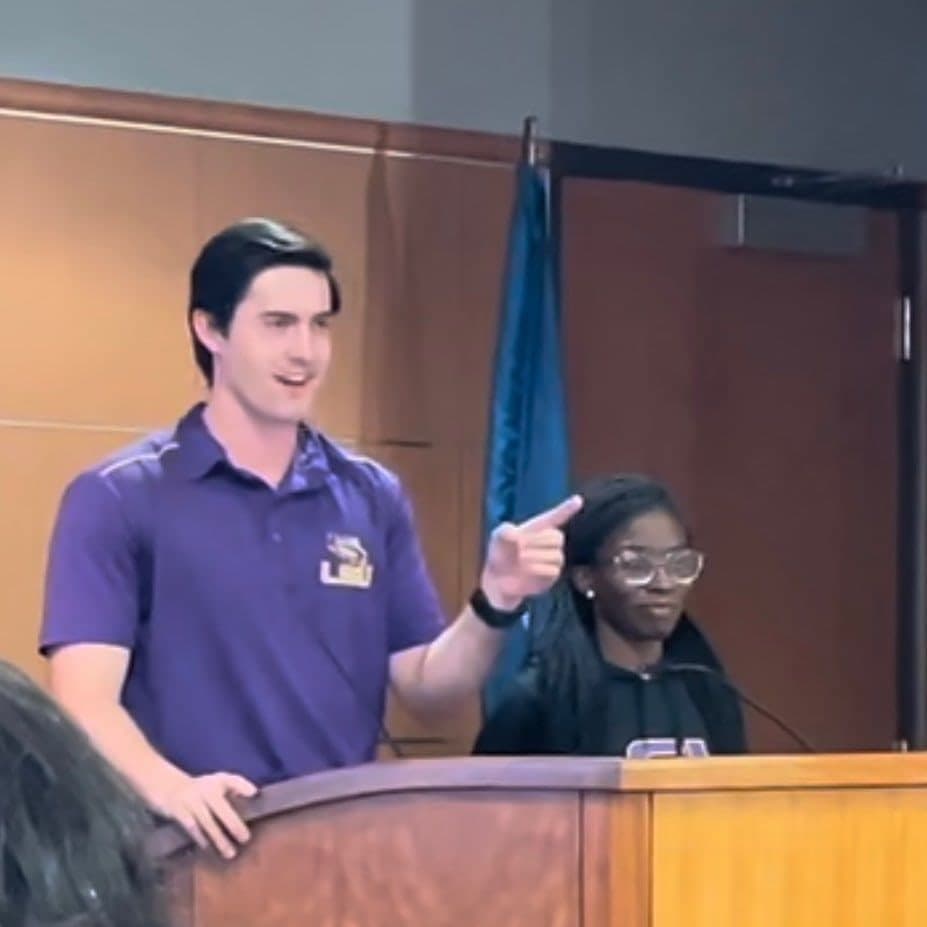
Colin Raby served eight semesters in LSU's Student Senate for the College of Engineering, from 2020 to 2024. He won a half term in the spring 2020 election, as a freshman, then a full term every fall from 2020 through 2023.The spring 2020 election was held twice: Student Government's judicial branch threw out the March 9 vote, students voted again on March 11, and with LSU moving classes online for the coronavirus, the results went out by email, The Reveille reported. Its fall 2022 results list him among the College of Engineering's full-seat winners: “SG: Fall election sees 1,600 votes, new seats awarded, both referendums fail,” by Corbin Ross, Oct. 29, 2022. In that time he wrote or co-wrote 37 measures that passed: 29 bills and 8 resolutions, 24 of them as lead author.
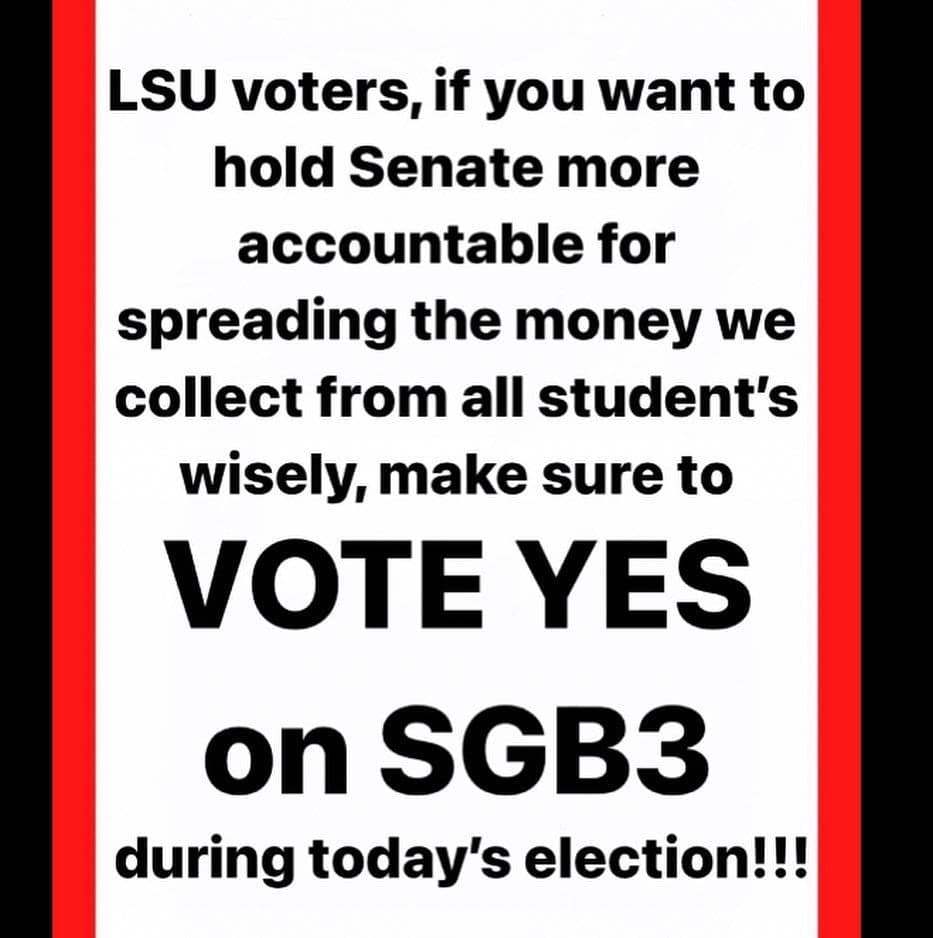
Much of the work was about money. In the fall of 2021 he co-wrote a constitutional amendment requiring a two-thirds vote of the Senate to spend student fees: the Student Body President vetoed it, the Senate overrode the veto, and students ratified it that November.It is the First Amendment to the Student Government Constitution, certified Nov. 15, 2021. By the spring of 2022 he was vice chair of the Senate's Budget and Appropriations Committee,So The Reveille described him in March 2022, as he ran for Student Government president. and from that fall he chaired it, until he stepped down in the spring of 2024 and handed it to Sen. Nicole Monceaux,LSU's list of Senate committees names him chair in December 2022 and again in October 2023, with Monceaux, his co-author on the bike repair stations bill, as vice chair. writing its budgets: the 2022–23 budget, $127,694 in student fees, which passed 40 to 2,“SG passes budget for 2023 fiscal year,” by Corbin Ross, The Reveille, Oct. 3, 2022. its spring update, and the 2023–24 budget with its fall update. He changed how the Senate could spend, too. Freedom in Funding lifted the limit of one allocation per semester for any student or organization, and Summer Funding Abilities let the committee fund students while the Senate was out for the summer. Then he built a public financial dashboard so any student could see where their fees went.
Some of it stands on campus. He wrote the bill that paid for bicycle repair stations and spent two and a half years getting five of them installed,The story is in his post from December 2023: more than a hundred emails and numerous meetings with the campus departments in charge of planning, approval, purchasing, storage and installation. and championed fifty fruit trees, with five years of upkeep paid for this time.A 2015 Student Government planting had paid for trees but not their care, and many died, as he told The Reveille in a feature on LSU's campus trees. He funded LSU Silver Wings' Hurricane Ian relief run to Fort Myers, a crawfish boil for student veterans, and passed a resolution urging LSU to keep Memorial Day free of classes, which LSU has done every year since 2023.Among his co-authors on that resolution, and on two others in 2021, was Sen. Julius Pallotta, who would later co-found FarmSmart, now FarmMind, with him.
Elections were a thread from the start. In the fall of 2020 he co-wrote the amendment that brought ranked-choice voting to Student Government, first used in the spring of 2021. His own run for Student Government president in 2022 gave him, he said, “a crash course in the flaws of the election system.”“Will campaign reforms open Student Government to all?” by Claire Sullivan, The Reveille, Feb. 9, 2023. That fall, when the Senate rewrote the election code with a $4,000 spending cap, he argued for a lower one, and he wrote its disclosure rule: every campaign's financial forms published for students to see, not just available on request.It is still in the Student Government Code, Title VI, § 111: the finance commissioner ensures “that all candidate and ticket financial forms submitted to the Election Commission are publicly published and emailed to ticket heads and all presidential and vice-presidential candidates.” He listed “heavily writing/amending the new election code” first in his re-election post that October. In the fall of 2023 he rewrote the rules again, in six bills: one subject per bill, plain titles for funding bills and code changes, room for candidates at the SG debate and public forums, and no election results until complaints are settled. The last was tested that spring. He had just hosted KLSU's interviews with both candidates for president, the day before voting opened; then, with complaints from both campaigns pending, he petitioned to enforce his bill and the 2024 results were postponed.“LSU SG voting results postponed amid election code confusion,” The Reveille, March 28, 2024. The code as entered had dropped a word from his bill: “after.” In April the University Court agreed: results wait for final judgments in every pending case.In re General Election Results, No. UC-23-005, decided April 22, 2024, on his petition: “Considering the author's use of the word final, the Court determines that final judgments must be issued in all pending cases prior to the official announcement of general election results.”
His last bill, in the spring of 2024, created Student Government's Department of Technology, Innovation, and Modernization, still on its list of executive departments. That summer he went to Washington as one of the first AI specialists in the U.S. House.